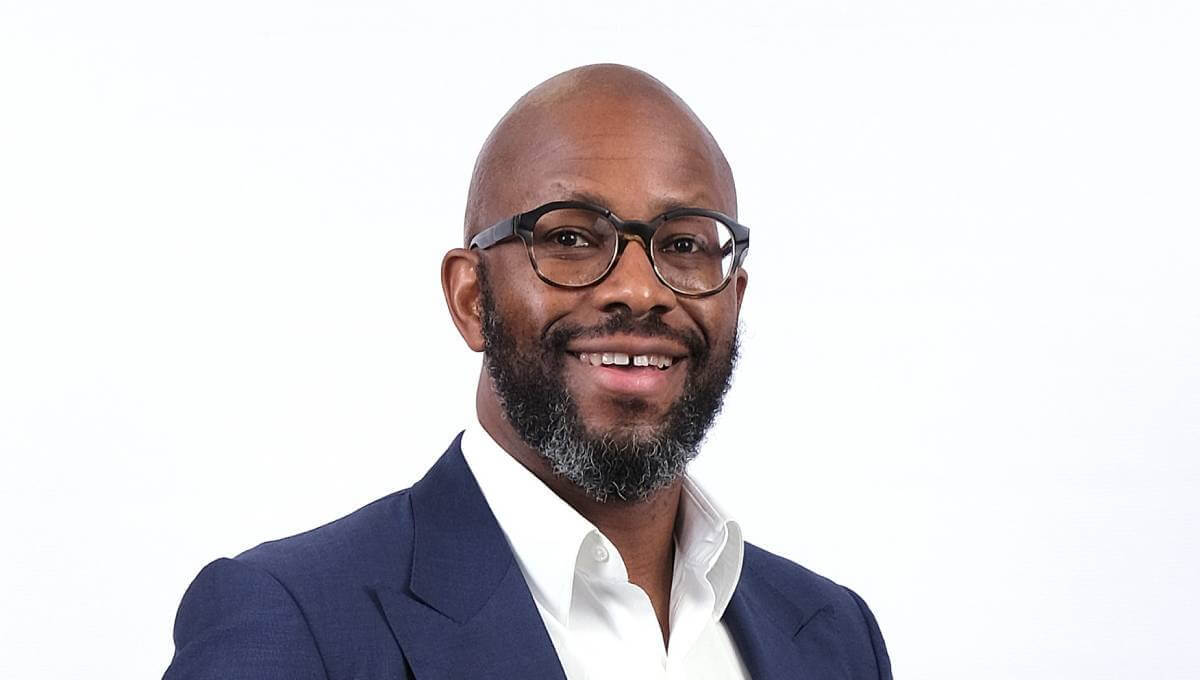
Level Up: What working at PiggyVest, LemFi, and Moniepoint taught Omotoso Dolapo about success
"Some of the kindest people I know are those I met at PiggyVest, and many are still close friends. I also learnt that it was okay to make friends in the workplace."

Promoted
Your Business Needs More Than a Website.
Custom software, automation, web apps, mobile apps and business systems built around how you work.
Build digital systems around the way your business operates.
Explore Software Services
In this week’s edition of Level Up, we spotlight Omotoso Dolapo, who has worked across three of Africa’s fastest-growing fintechs — PiggyVest, LemFi, and Moniepoint. In less than five years, she has moved from handling social media accounts to leading growth at a country scale.
In this conversation, she talks about accepting a 45% pay cut to take an internship at PiggyVest, staying honest even when it could cost her the job, what she thinks about PiggyVest, LemFi, and Moniepoint, and how she would grow a new fintech.
If your career were a movie, what would the title be and why?
Scandal. Actually a TV series, not a movie. I watched it when I was in secondary school. It’s about a woman called Olivia Pope who is constantly fixing things for the presidency and other powerful people. I picked it because her trajectory mirrors mine; there are moments when she’s fresh out of law school, and it’s fast-paced and unexpected. There are high and low moments: times I have messed up, times other people have messed up. Scandal covers that from season one to seven.
What made you switch to tech before having your day in court?
The pandemic. Anyone who went to school with me is still shocked I never practised law. Academically, I was above average. Socially, I was the embodiment of a perfect law student: I did well in competitions, and I had law firm internships almost every holiday.
Then in my final year, I started to feel very disillusioned. Internships expose you to what the working culture actually looks like. I saw how lawyers lived, the hours they put in, and how they handled things mentally and emotionally. It was not glamorous. It was not Suits. It was sleep-deprived people carrying files from court to court in litigation, or grinding through constant crunch in corporate. I did not enjoy any of my legal internships.
That is when I knew there was a disconnect. That same year, a competition landed me my first non-law internship at Amnesty International. I moved from Lagos to Abuja for it, and I noticed something: people there were genuinely happy. When staff asked how you were doing, they actually waited for an answer.
One day I wanted to test it out; someone asked if I was happy, and I said no. They said, ‘Give me ten minutes,’ came back, and said, ‘Let’s go grab pizza.’ They did serious work too, but I could not picture that happening at a law firm.
At that point, I knew I wanted to leave law but did not know for what. I told my mentor, a Senior Advocate of Nigeria, that I was not sure law was for me. He pushed back hard, said I wrote well, thought clearly, and should be a judge. So I went to law school still holding onto that idea, unlike some classmates who knew early they would not practise and skipped it altogether.
Then the pandemic hit mid-law school. Everyone was suddenly talking about tech. I did not know what I wanted to do in it, but I knew one thing for certain: I did not want to be a tech lawyer. I was done with law, to the core.
I had some business experience running a small event planning business through university, so I considered business development in tech, though I wasn’t fully sold on it. When the pandemic ended, I went back, wrote my final exams, passed, and told myself I would finish the degree — better to have it and not need it than need it and not have it, but never work at a law firm.
Then came the rejections. One in particular hurt. I interviewed for a business development role at a very popular tech startup then, went through four rounds, and then found out through social media that they had already hired someone and were running orientation. The recruiter had simply ghosted me. I later learned the person hired was a former classmate. It stung.
I was freelancing at the time, writing course syllabi for someone’s event planning academy. During one of our review calls, he noticed I was down, and I told him what happened. He called the company’s CEO directly. The CEO called back within five minutes, apologised, and explained the other candidate had simply interviewed better. It was a broken hiring process, not malice, and I have forgiven them since.
After that, I joined a small advertising agency as an executive assistant (EA). In the interview, the founder told me I was not assistant material; I was business development material, and he hired me for that instead. But he also said something that stuck: he was scared to hire me because he felt Cowrywise or some tech company would poach me soon. I brushed it off. Two months later, PiggyVest’s founder tweeted about people wanting to break into tech without knowing where to start and mentioned customer support as an entry point. Days later, PiggyVest posted a customer support opening on social media. I had run social media accounts before and figured I could talk my way from support into business development eventually.
This time I mobilised everyone I knew to put in a word with the hiring manager; about seven people vouched for me. I was told I was overqualified for the internship pay. I said, ‘Hire me anyway; take the risk.’ I got it, worked customer support for eight months, and started picking up small writing tasks, mostly captions. My manager kept choosing my captions over other people’s, and that is how I found my way into marketing.
Read also: How Oluwatobiloba Animashaun went from customer service intern to Flutterwave product manager
So your advertising boss was right?
He was. When I told him I was leaving for PiggyVest, he was so defeated and said, “I told you so.” The funny thing is, PiggyVest was paying me 45% less than he was. I still left, and I did not even last two months there, so I never added it to my profile. He was a great boss. As a young person, opportunities do not always come around twice.
Do I have regrets? Some. But every place I have worked since has taught me something, shown me a new standard to reach for. I recently watched a former classmate and a former PiggyVest colleague both hit five years somewhere, and I want that for myself now: to stay and build something solid for at least five years.
You took an oath to build with LemFi over a bowl of amala. What made you leave?
Everything I know about marketing, I learned on the job. I have never done a formal marketing course. I spent about three years there and eventually realised I had settled into thinking about problems only one way. Talking to marketing peers elsewhere, I kept hearing about approaches I had never considered. I wanted to test what I had built against a new environment and keep learning. That is why I left.
What did you learn at PiggyVest that carried over to LemFi and Moniepoint?
Kindness. Some of the kindest people I know I met at PiggyVest, and many are still close friends. I also saw what a good manager looks like and decided I needed to become an even better one. My manager there is still someone I text when I need something. PiggyVest taught me the value of community at work: you spend so much time with these people, you might as well be good to them.
Of the three, which culture left the deepest imprint on you?
Hard to pick one. PiggyVest gave me kindness and community. At LemFi, I learnt grit and speed without sacrificing quality. TransferGo taught me quality control, and a respect for data and research. Each place added something. The real skill is knowing what is worth carrying forward and adjusting it for wherever you land next.
What do you think made these three companies winners?
Leadership, always leadership. And people. At all three, I met dreamers and doers, people who came to win, who wanted to build something that would outlive them. Good leadership is what gets everyone pulling in the same direction. If someone came to me today with a savings problem, I would still point them to PiggyVest, because I trust the calibre of people building there. Without the leader, nobody buys into the dream.
What project or period in your career are you most proud of?
My Moniepoint era, though the old me would have said LemFi, since living across different countries there gave me friends everywhere and taught me to settle in fast anywhere. But Moniepoint is different. I joined two months after launch, when the team was tiny, and I have watched what it grew into. I still get a thrill when someone tweets about the app or notices something we built. It was the first time I did something without training wheels. I had to become a more data-driven leader, make tough calls about who fit where the team was heading, and figure it out mostly on my own.
You have worked in customer success, marketing, and community and growth. What is the one skill that cuts across all three?
Delight. In customer success, you learn that you have to give people a feeling, ideally a positive one. In growth, I want someone to discover a product and feel that same delight. At the end of the day, whatever role you are in, you are selling an emotion: ease, relief, delight, or excitement. Own that emotion and build everything around delivering it.
You moved from social media manager to country manager in a fairly short window. What made you ready, and what did you have to learn fast?
Execution. As the business grew, I grew with it. Nobody was hiring externally for every new gap, so if you had the capacity, you got the responsibility. I learned how to use tools like Customer.io in a day. If someone said, “Let’s ship this tomorrow,” I didn’t think it was impossible; I thought, “What time tomorrow?” What do we have? Let’s get it done.
One example: we work in an FCA-regulated space, so everything has to clear compliance first, which used to take days. I sat down with compliance, mapped out a rule set, and built an internal Claude artefact that runs our content against those rules before it goes to them. That cut our review window from four days to under an hour.
I also had fewer distractions when I was younger, and I knew exactly how hard it had been to get a job in the first place, so I protected mine fiercely. If I needed to stay on a call until midnight, I did. When I became country manager and had to launch our US market, I was up talking to people in their morning while it was 2 or 3 a.m. in Lagos, then still awake for the regular 9 to 5 to implement what I had learned overnight. Know the sacrifices before you take the leap.
What is the thing people underestimate about making that kind of leap?
How much you have to learn, especially when you’re young. You are in rooms with people who have been doing this far longer, and you are expected to contribute at their level. The first time I had to build a P&L, I had never seen that many numbers at once and panicked. Now I can sit down and build one, or a full year’s marketing forecast, and I studied law. I got there by sitting with videos, articles, and tools like Claude until I understood them and staying constantly ready to learn.
Would you advise someone to start a fintech now?
Yes, if you have a genuine problem to solve and realistic expectations about what solving it will actually take. There are a lot of fintechs already, but there are still underserved people- not necessarily unbanked, but people who want to handle their money differently and are not being served well. I live in the UK now, and even here I still feel underserved in certain ways.
Not everyone can solve everything. Some products are built to solve one or two problems well, and trying to be everything makes a business unsolvable. If you have a clear problem, a funding path, realistic one- to three-year projections, and honesty about when it is time to walk away from a market, you will be fine.
How would you sell it?
Talk to the people you are building for, before you launch, after you launch, and all the way through. Find out exactly what your product should solve and how to talk about it. That is the easiest way to sell anything.
What is a failure you faced in your career that would surprise your best friend?
At TransferGo, I once had to sit leadership down and tell them we were not going to hit the forecast we had committed to, and that my own role could be affected by saying so. You do your job assuming it will work, and when it does not, you go back through the numbers trying to make sense of it. I have felt that kind of failure in big and small doses more than once.
A mistake that impacted your career?
In marketing, a lot of decisions are a coin toss, so I would not call anything a mistake that derailed my career. I have been fortunate to have managers I could be candid with, people who would call me out gently when I was not being honest with myself about something that had not worked. That has humbled me more than it has hurt me. You pray, you execute, and you hope.
How do you picture your life now if you had stuck with law?
I have actually had this conversation with friends. Everyone insists I would have been anything but average, and I believe that too. I have never been afraid of hard work, and I do not think that would have changed in a courtroom. I still use my law degree today, negotiating influencer contracts, talking people into deals, and convincing people to bet on me. I would have been a great lawyer. Would I have been as happy as I am now? I am not sure. But I would have built a strong career either way.